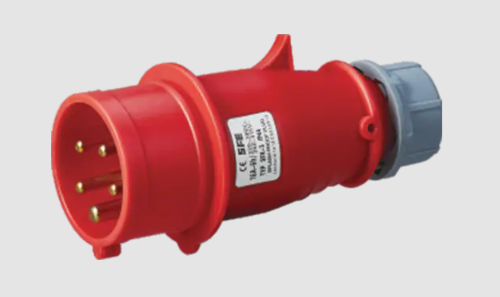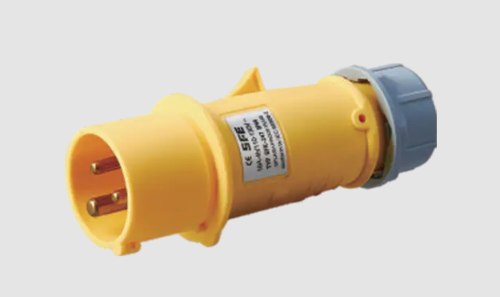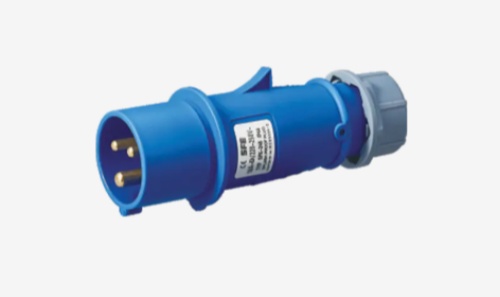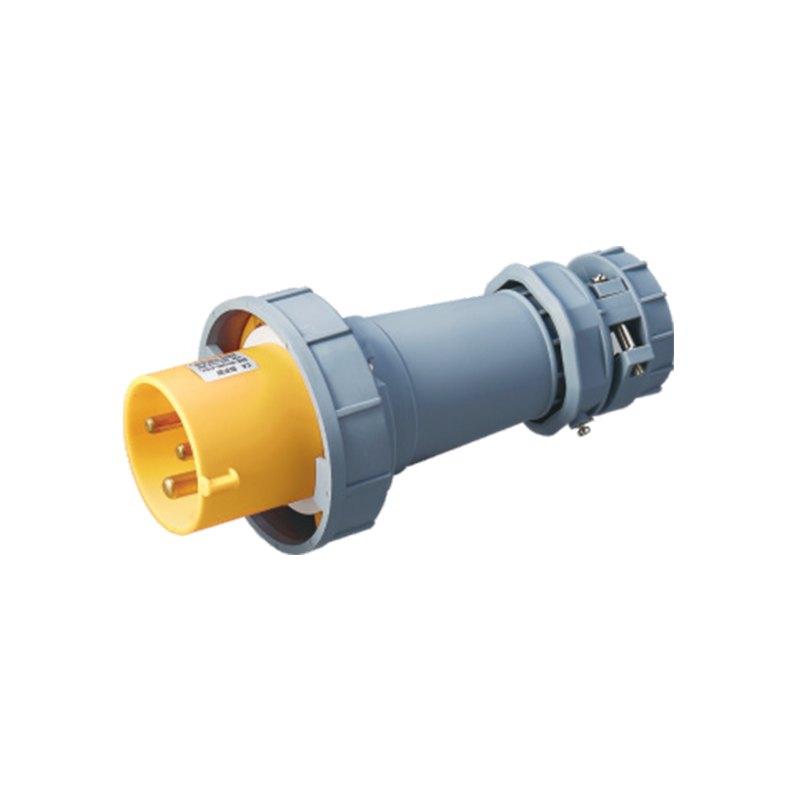
Big electrical systems need more than just big transformers and switchgear. They also need good connection parts like In...
READ MORE
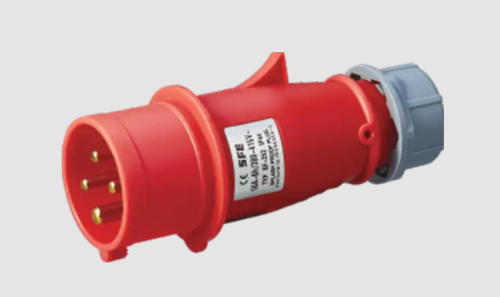
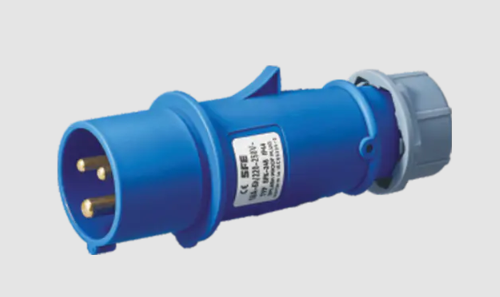
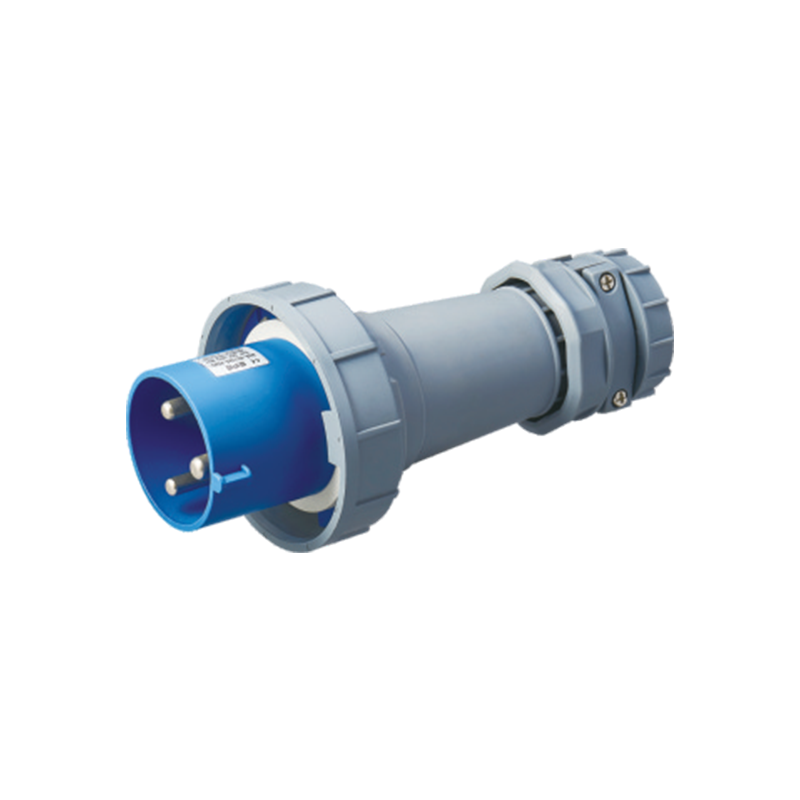
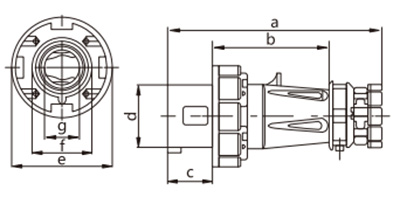
| Earth contact position | 4h | ||
| Rated current(A) | 63 | 125 | |
| Pole | 3 | ||
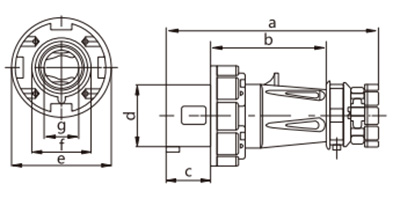
| Dimension(mm) | a | 238.9 | 286 |
| b | 179.5 | 219 | |
| c | 51.1 | 57 | |
| d | 69.5 | 81.1 | |
| e | 113 | 131.5 | |
| f | 75.5 | 83.3 | |
| g | 36.5 | 42.5 | |
| Cable nominal cross-section area(mm²) | 10-16 | 25-35 | |
| Current(A): | 63A,125A |
| Voltage(V): | 110-130V~2P+E |
| Protection degree: | IP67 |

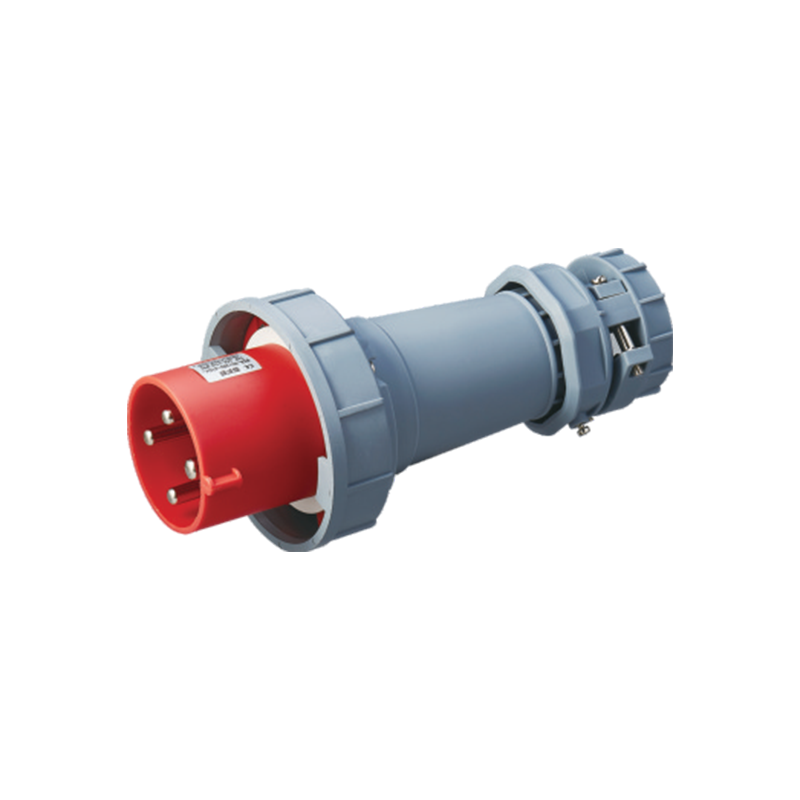
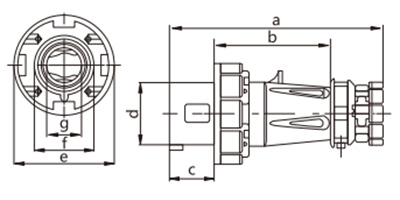
| Earth contact position | 6h | ||
| Rated current(A) | 63 | 125 | |
| Pole | 3 | ||
| Dimension(mm) | a | 238.9 | 286 |
| b | 179.5 | 219 | |
| c | 51.1 | 57 | |
| d | 69.5 | 81.1 | |
| e | 113 | 131.5 | |
| f | 75.5 | 83.3 | |
| g | 36.5 | 42.5 | |
| Cable nominal cross-section area(mm²) | 10-16 | 25-35 | |
| Current(A): | 16A,125A |
| Voltage(V): | 220-240V~2P+E |
| Protection degree: | IP67 |

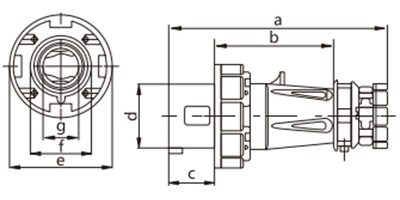
| Earth contact position | 6h | ||
| Rated current(A) | 63 | 125 | |
| Pole | 4 | ||
| Dimension(mm) | a | 238.9 | 286 |
| b | 179.5 | 219 | |
| c | 51.1 | 57 | |
| d | 69.5 | 81.1 | |
| e | 113 | 131.5 | |
| f | 75.5 | 83.3 | |
| g | 36.5 | 42.5 | |
| Cable nominal cross-section area(mm²) | 10-16 | 25-35 | |
| Current(A): | 63A,125A |
| Voltage(V): | 380-415V~3P+E |
| Protection degree: | IP67 |

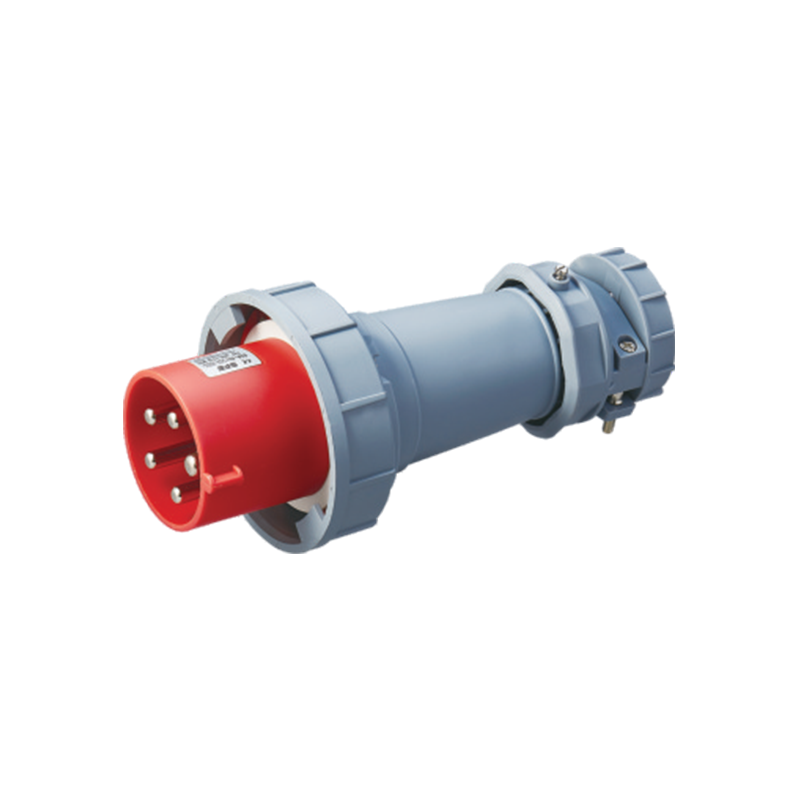
| Earth contact position | 6h | ||
| Rated current(A) | 63 | 125 | |
| Pole | 5 | ||
| Dimension(mm) | a | 238.9 | 286 |
| b | 179.5 | 219 | |
| c | 51.1 | 57 | |
| d | 69.5 | 81.1 | |
| e | 113 | 131.5 | |
| f | 75.5 | 83.3 | |
| g | 36.5 | 42.5 | |
| Cable nominal cross-section area(mm²) | 10-16 | 25-35 | |
| Current(A): | 63A,125A |
| Voltage(V): | 220-380V~/240-415V~3P+N+E |
| Protection degree: | IP67 |

Big electrical systems need more than just big transformers and switchgear. They also need good connection parts like In...
READ MORE
Production layouts change more frequently than before. Manufacturing lines are adjusted to accommodate new orders, tempo...
READ MORE
More and more places these days are using their own local power systems. Things like business parks, university campuses...
READ MORE
Small hardware decisions can ripple through a facility’s daily rhythm. Fixing power feed points where equipment routinel...
READ MORESelecting a plug in the "third‑generation" class is often about one thing: reliable power in environments that punish connectors. Here's a practical way to choose the right amperage and reduce failures in the field.
Match amp rating to the real load (not the label)

Why waterproof protection and material choice matter
High water resistance helps prevent tracking, corrosion, and contact contamination—especially outdoors, in wash-down areas, or near marine/utility sites. Nylon PA66 adds mechanical strength and dimensional stability, supporting consistent clamping and sealing performance over time.
Safety features that reduce misuse
In busy sites, connection errors happen. Mechanical interlocking on certain configurations can help prevent unsafe plug/unplug actions under incorrect conditions, supporting better operational discipline and reducing downtime.
Application fit: industrial to outdoor power
Third‑generation plugs are used not only in factories and construction, but also for temporary power systems and controlled outdoor setups (including camping power distribution), particularly when a rugged connector and stable contact performance are priorities.