
 English
 Español
 中文简体
中文简体


Address: No. 199, Weiwu Road, Yueqing Economic Development Zone, Zhejiang Province, China.
A control panel needs a 24V socket for a test light. A packaging line needs a 48V connection for a sensor. A workshop bench needs 110V for portable tools. A wall-mounted industrial socket for low voltage provides that fixed point. It mounts to a wall, machine frame, or bench, wired into the low-voltage circuit, ready for the plug. The keying stops mismating. The housing takes the abuse. For panel builders and machine integrators, the socket is where fixed wiring meets portable equipment.
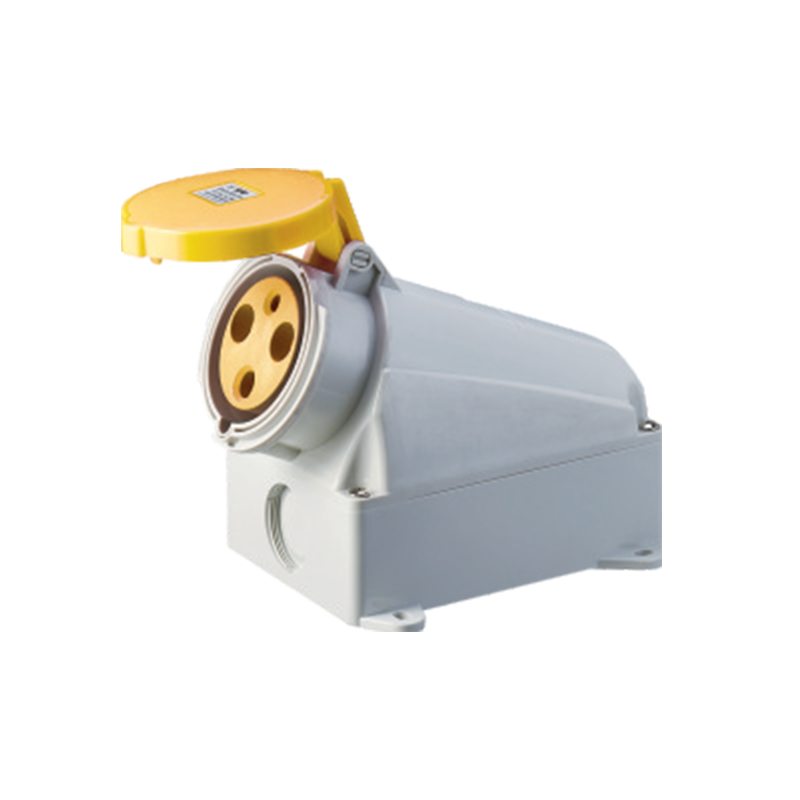
A Downward Face Keeps Trouble Out
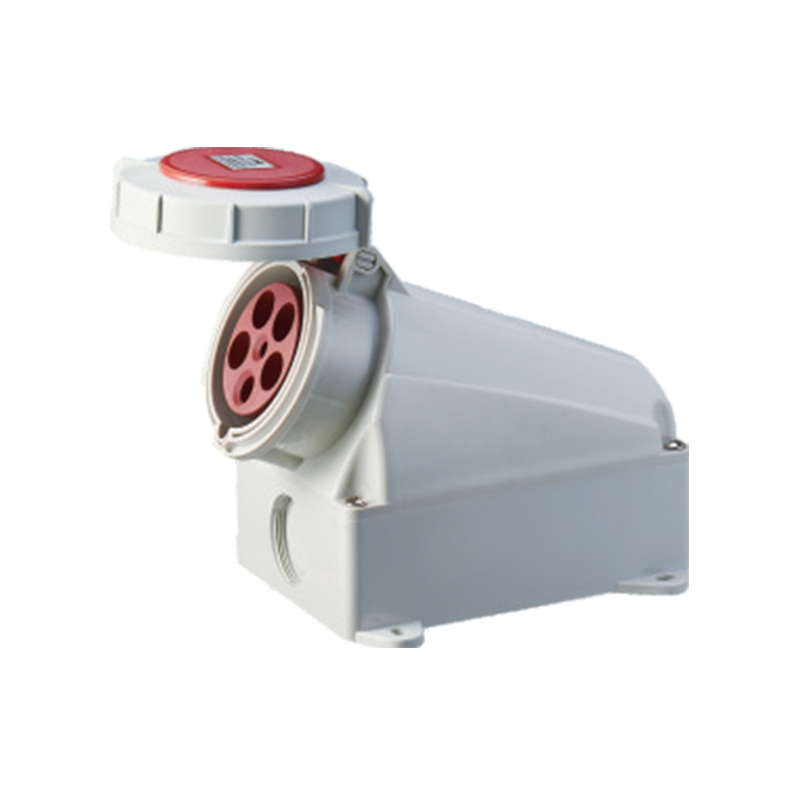
The plug entry angles down. That is not an accident. Water and dust fall away from the contacts instead of collecting in them. A wall-mounted industrial socket for low voltage with a downward entry works in dusty shops and damp washdown areas without the contacts corroding.
The housing is nylon or polycarbonate, impact-resistant and chemical-tolerant. It mounts flush with screws through flanges or a central ring. The mounting points absorb the push and pull of plug insertion. A wall-mounted industrial socket for low voltage that wobbles on its screws will eventually loosen the wiring behind it.
The terminals sit behind the plug face. The installer wires from the rear or side. A clear terminal layout with space for ferrules speeds the job. A wall-mounted industrial socket for low voltage that is hard to wire gets wired wrong.
One Voltage, One Keyway
A 24V socket must reject a 48V plug. The keying does that. Pin arrangement, earth position, shell profile, all of it prevents mismating. A wall-mounted industrial socket for low voltage with a standardized keyway only accepts the plug with the same rating.
The pins are brass with silver or nickel plating. Low voltage does not mean low current. A 24V circuit can carry 16A. The contacts have to hold that current without heating. A wall-mounted industrial socket for low voltage with properly sized contacts stays cool at rated load.
The voltage and current ratings are molded into the face. They have to stay readable after years of use. A wall-mounted industrial socket for low voltage with permanent markings helps the maintenance tech identify the right socket without opening drawings.
Here is what a wall-mounted industrial socket for low voltage needs to deliver:
- Nylon or polycarbonate housing that survives impact
- Keying that prevents mismating with other voltages
- Brass contacts with plating for stable resistance
- Clear voltage and current markings
- IP-rated lid with gasket sealing
- Terminal layout that speeds installation
The Lid That Closes Itself
The socket sits idle many of the time. Dust settles. Moisture condenses. The lid is what keeps the contacts clean. A spring-loaded lid closes automatically when the plug comes out. A threaded lid seals tighter but only if the user remembers. A wall-mounted industrial socket for low voltage with a self-closing lid does not rely on memory.
The gasket under the lid is the weak point. UV exposure and temperature swings harden it. A cracked gasket lets water in. A wall-mounted industrial socket for low voltage with a UV-stabilized gasket keeps sealing through seasons.
Machine Frames, Test Benches, Charging Stations
Machine builders mount sockets on the frame for sensor connections and service tools. The technician connects without opening the panel. Test benches run rows of sockets, each wired to a different supply. The keying and markings prevent the 24V device from meeting the 48V socket. Battery charging systems use wall sockets for DC output. A wall-mounted industrial socket for low voltage with DC-rated contacts handles the continuous load.
The Wobble That Becomes a Fault
The mounting screws loosen from vibration. The socket shifts. The terminals flex. The connection weakens. A wall-mounted industrial socket for low voltage with a solid mounting design stays rigid. The contacts wear from repeated plugging and the grip loosens. Tempered contact springs hold their tension. The lid gasket dries and the contacts corrode. A UV-stabilized gasket avoids it.
A wall-mounted industrial socket for low voltage brings the circuit to the point of use. The plug fits only the right socket. The contacts carry the current. The lid keeps the dirt out. Choose a socket with correct keying, a sealed lid, and contacts that hold their grip. The connection works every time. That is what it is for.
