 English
 Español
 中文简体
中文简体

Address: No. 199, Weiwu Road, Yueqing Economic Development Zone, Zhejiang Province, China.
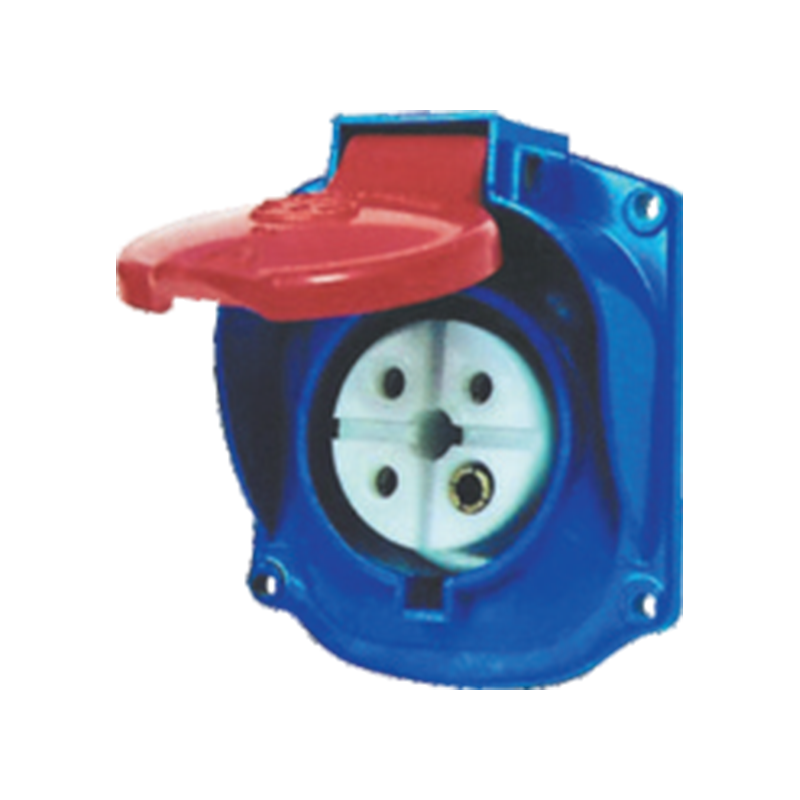
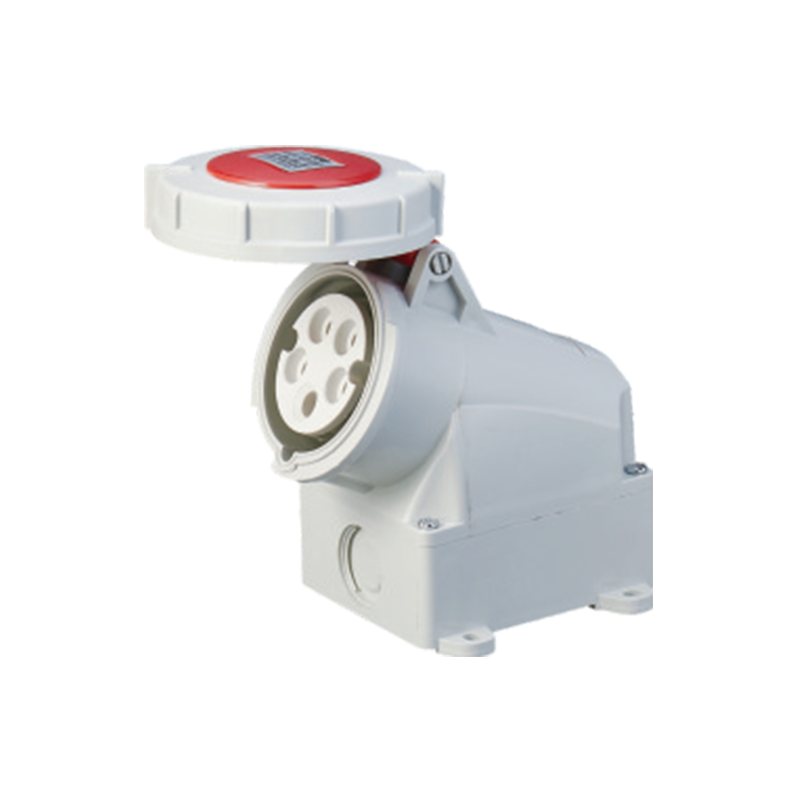
A portable socket sits on the end of an extension cord. You move it where you need it. A wall mounted industrial socket is the opposite. You screw it to a wall, a pillar, or a machine panel. It stays there. Wires run inside the wall or in conduit. The socket provides a fixed connection point for equipment that does not move. Welders. Compressors. Large saws. When the machine needs power, you plug it into the wall. When it needs service, you unplug it.
How a Wall Mounted Industrial Socket Differs from a Portable One
The housing is designed for permanent attachment, not handheld use
A portable socket has a handle or grips. You carry it. A wall mounted industrial socket has mounting ears or flanges. You screw through these ears into the wall or panel. The socket does not move. The housing is often shallower than a portable socket because it does not need to hold a long cable entry.
The cable enters from the back or the bottom. The socket sits flush against the mounting surface. No gap. No wobble.
Terminals are positioned for easy wiring from the rear
Wire comes from inside the wall. A wall mounted industrial socket has terminals at the back. You strip the wires, insert them into the terminals, and tighten the screws. The socket then screws onto the wall box or mounting plate. The terminals are covered. No live parts exposed.
Here is what a wall mounted industrial socket needs for safe installation:
- Terminals labeled clearly for L1, L2, L3, N, and PE
- Wire capacity matched to the current rating (2.5mm² for 16A, 6mm² for 32A)
- Strain relief built into the socket or provided by the wall box
- Gasket between socket and mounting surface to keep out dust
Where Wall Mounted Industrial Sockets Get Installed
Along workshop walls for stationary equipment
A table saw does not move. You set it up once. A wall mounted industrial socket behind the saw provides power. The saw plugs in. The cord does not stretch across the floor. No trip hazard.
Multiple sockets along a wall let you rearrange machines. Unplug the saw. Move it. Plug it into a different socket. No extension cords. No daisy-chaining.
On machine panels for local disconnection
A large machine has a control panel. A wall mounted industrial socket mounted on the panel lets the operator unplug the machine for maintenance. The socket is right there. No walking to the wall. No opening the panel to disconnect wires.
The socket acts as a local disconnect. Lockout/tagout procedures require a visible break in the power supply. A plug and socket provide that break.
What Makes a Wall Mounted Industrial Socket Durable
Impact-resistant housing that survives the factory floor
A wall mounted industrial socket on a workshop wall is safe from forklifts. But one on a machine panel is not. Operators bump into it. Carts hit it. Tools drop on it.
Polyamide (nylon) housing handles impacts. Polycarbonate is cheaper but cracks. Rubber housing is outstanding for impact absorption but costs more.
Here is how housing materials compare:
- Polyamide — tough, resists oil and solvents, good for workshops
- Polycarbonate — clear, brittle, cracks under impact, not recommended
- Rubber — absorbs impacts, expensive, good for high-traffic areas
Sealed construction keeps out dust and moisture
A wall mounted industrial socket in a dry workshop needs small sealing. IP44 is fine. A socket in a food processing plant gets hosed down daily. IP67 or IP69K required.
The seal between the socket and the wall matters. A rubber gasket compresses when you tighten the mounting screws. Water cannot run down the wall and enter behind the socket.
The cover over the socket openings also needs a seal. When no plug is inserted, the cover closes tight. Dust stays out.
What Goes Wrong with Cheap Wall Mounted Sockets
Mounting ears break off when you tighten the screws
Cheap wall mounted industrial socket products have thin mounting ears. The ear is plastic. You tighten the screw. The ear cracks. The socket wobbles. The screw falls out.
Better sockets have metal mounting inserts molded into the plastic. The screw tightens against metal. The ear does not crack.
Terminals loosen from vibration over time
A machine vibrates when running. The vibration transfers to the wall mounted industrial socket mounted on the machine panel. The terminal screws loosen. The connection gets hot. The socket fails.
Good sockets use cage-clamp terminals or screws with locking washers. The connection stays tight despite vibration.
The cover hinge breaks from repeated opening and closing
The cover on a wall mounted industrial socket gets opened when you plug in. Closed when you unplug. On a machine that gets unplugged daily, the hinge cycles hundreds of times per year. Cheap hinges are thin plastic. They break.
Better hinges are reinforced or use a metal pin. The cover stays attached.
Installation Tips for Wall Mounted Sockets
Mounting height affects usability and safety
A wall mounted industrial socket mounted too low is hard to reach. You bend over. You strain your back. Mounted too high, you need a ladder.
Standard height for workshop sockets is 120 to 150 centimeters from the floor. Comfortable standing reach. Cords hang down without dragging on the floor.
Spacing determines how many machines you can plug in
Machines have cords. Cords are usually 2 to 3 meters long. A wall mounted industrial socket every 3 meters along a workshop wall ensures every machine can reach a socket. No extension cords crossing walkways.
A wall mounted industrial socket is not a glamorous product. It sits on a wall. It does one thing. But when it fails, the machine stops. The workshop stops. Buy sockets with impact-resistant housing, sealed construction, and durable terminals. Pay attention to the mounting ears and the hinge. The difference between a $20 socket and a $50 socket is small compared to the cost of downtime. Install them at the right height and spacing. Your workers and your equipment will thank you.