
 English
 Español
 中文简体
中文简体

Address: No. 199, Weiwu Road, Yueqing Economic Development Zone, Zhejiang Province, China.
The Shell Material Sets the Baseline
Many 63A plugs use PA6 nylon or a similar polyamide for the housing. The material has to take impact without shattering. It has to handle heat from the contacts under full load. It has to resist oils, UV, and the kind of grit that blows across a construction site. A 63A industrial plug factory that uses recycled or low-grade nylon will save on material cost. You will see the difference the first winter. The plastic goes brittle. A drop from waist height onto concrete cracks the shell. Then water gets in.
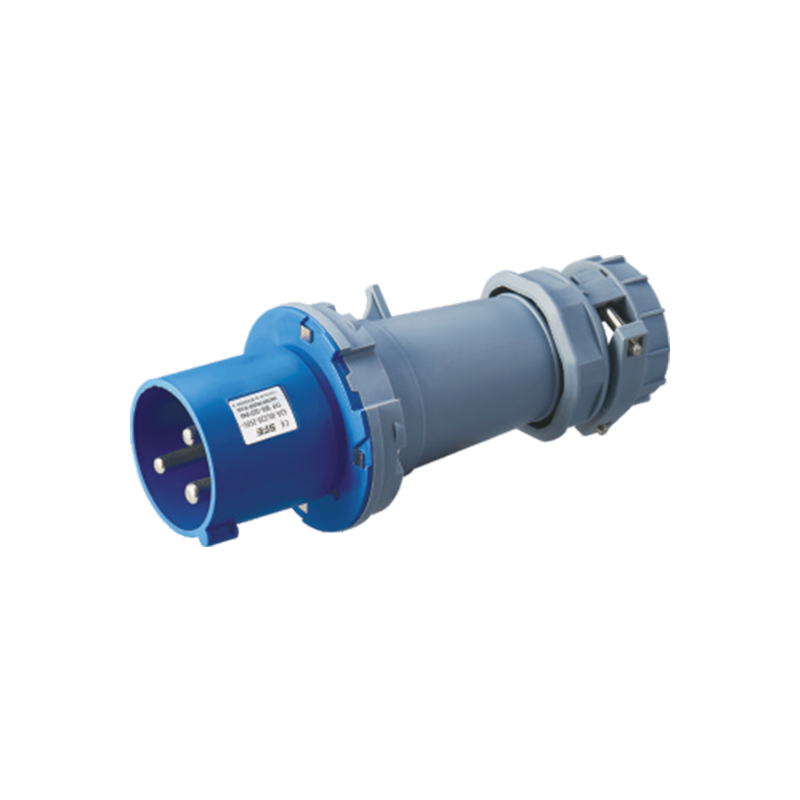
There's an easy field check. Press your thumb hard into the housing near the cable entry. A good PA6 shell flexes slightly and returns. Cheap material feels either rock-hard or soft enough to leave a temporary dent. Neither is right.
The Contact Assembly
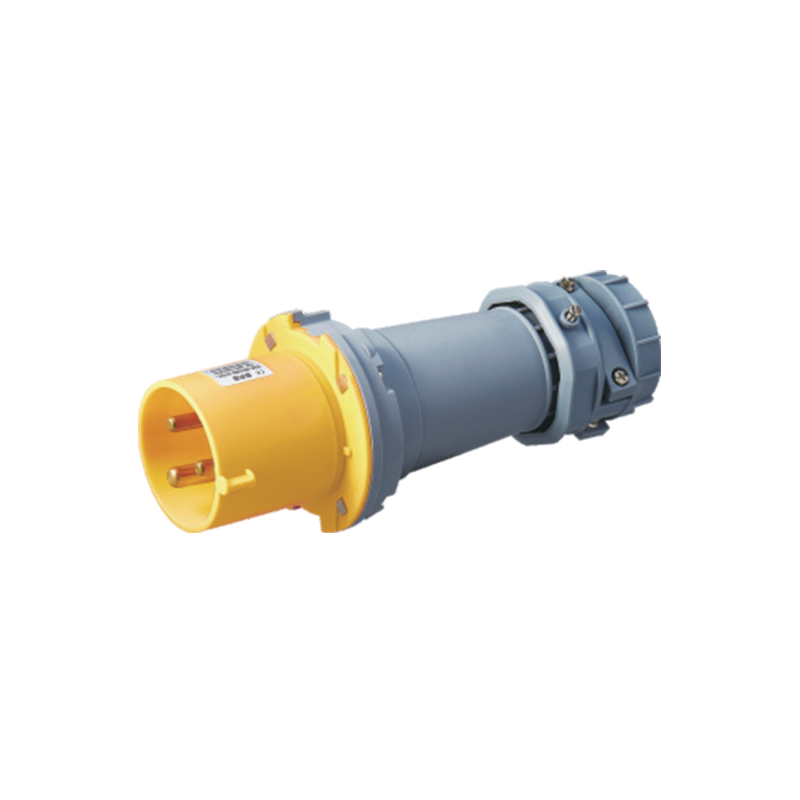
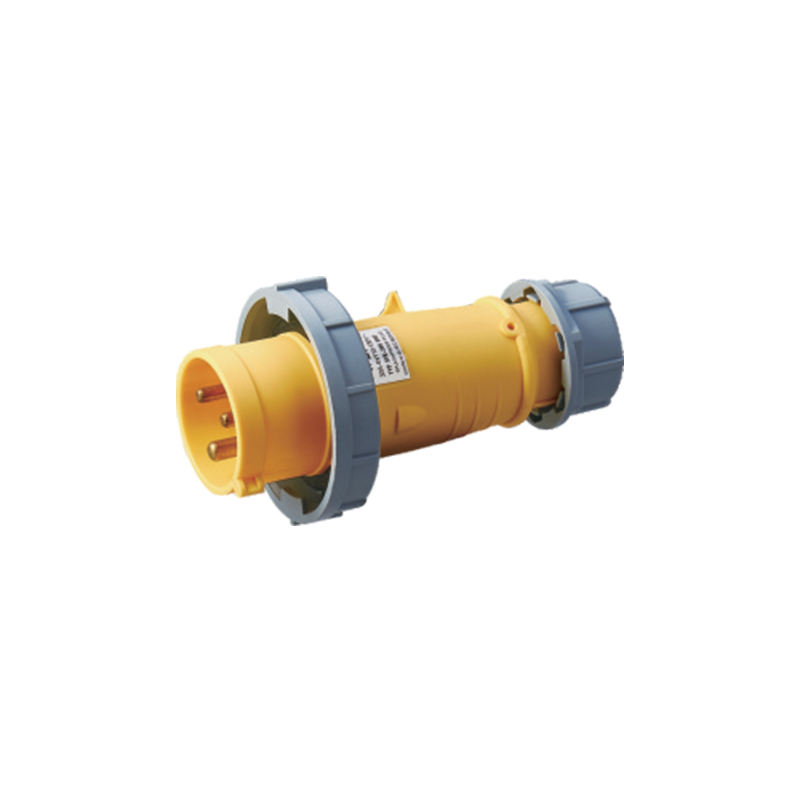
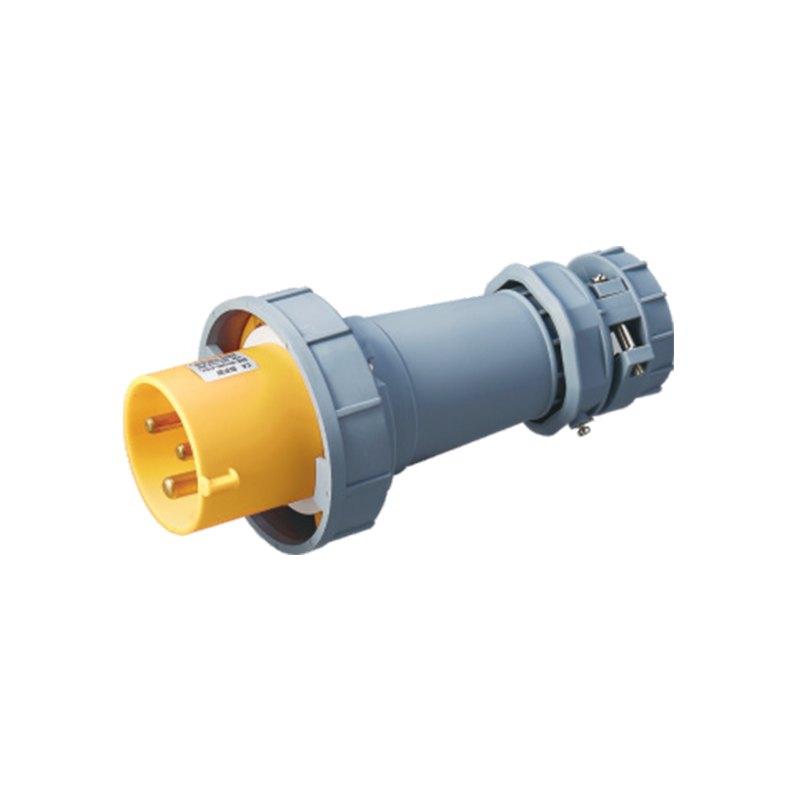
The pins and sleeves inside a 63A industrial plug handle serious current. At 63 amps, a poor contact heats up fast. That heat accelerates oxidation. Oxidation raises resistance. The cycle repeats until something melts. A 63A industrial plug factory worth dealing with uses solid brass contacts with a nickel or silver tip. Some use brass with a phosphor bronze spring component in the sleeve to maintain grip pressure through thousands of connect-disconnect cycles.
Ask about the contact material. If the answer is just "brass," ask about the coating. Bare brass works initially but develops a patina that increases resistance over time. Nickel plating delays this. Silver alloy on the contact tips is better still for high-cycle applications. A 63A industrial plug factory that serves the event lighting industry, where plugs get mated and unmated daily, will know this.
The earth contact deserves special attention. On a 63A plug, the earth pin is longer than the others. First mate, last break. That is a safety requirement, not a convenience. Check the sample. The earth pin should protrude noticeably further than the phase and neutral pins. If the difference is marginal, the mould was worn out. Reject it.
IP Ratings Are Tested, Not Assumed
A 63A industrial plug usually carries an IP44 or IP67 rating. IP44 handles splashing water. IP67 handles temporary immersion. The gasket between the plug and socket creates that seal. A 63A industrial plug factory should provide test reports, not just a stamp on the housing. The gasket material is typically silicone or EPDM rubber. Silicone holds up better in bad cold. EPDM costs less and resists UV well. Both work if the groove geometry is correct.
Inspect the gasket on a sample. It should sit evenly in its groove with no twists. Close the plug onto a socket. The gasket should compress uniformly. If you see a gap on one side, the mould tolerances are loose. Water will find that gap.
Cable Entry and Strain Relief
Many failures happen at the cable gland. The wire gets tugged. The gland slips. The conductors pull out of their terminations. A 63A industrial plug factory designs the cable entry with a compression gland and a cord grip. The gland tightens around the cable jacket. The cord grip clamps the inner conductors separately. This double anchoring prevents tension from reaching the terminals.
Check the clamping range. A 63A plug usually takes cable from about 10mm to 25mm in diameter. If your application uses thick rubber-sheathed cable, make sure the gland opens wide enough without forcing. A gland that barely fits is one that will fail early.
Terminal Screws and Wiring
The terminals on a 63A industrial plug are not small. They take conductors up to 16mm² or 25mm² depending on the configuration. The terminal screws need a deep hex or large flathead slot. A 63A industrial plug factory that ships plugs with shallow screw heads makes installation slower and less reliable. The electrician cannot get proper torque. The connection works loose.
Check that the terminal markings are clear. L1, L2, L3, N, and the earth symbol. They should be moulded into the housing or printed in a way that does not rub off with cleaning solvents. A faint ink stamp that disappears after one wipe is useless. On a 63A plug, a miswired phase can destroy equipment downstream.
What to Ask Before Placing an Order
Here is a shortlist of questions for a 63A industrial plug factory:
- What is the housing material and its impact rating at minus 25 degrees?
- Are the contacts solid brass, and what is the plating?
- Can you provide the IP test certificate from an accredited lab?
- What is the cable clamping range and gland type?
- Do the terminals accept a standard torque screwdriver?
- Is the earth pin length confirmed to first-mate, last-break specification?
- What is the regrind percentage in the nylon housing?
That last question is important. Regrind is recycled material from sprues and rejects mixed back into virgin nylon. A small percentage is normal. Too much makes the housing brittle. A 63A industrial plug factory should know their regrind ratio and keep it within industry norms.
A 63A industrial plug factory confident in its product will not hesitate to send samples and answer technical questions. The ones that deflect to sales talk are hiding something. A 63A industrial plug is a safety component. Treat it like one, and source accordingly.
