
 English
 Español
 中文简体
中文简体


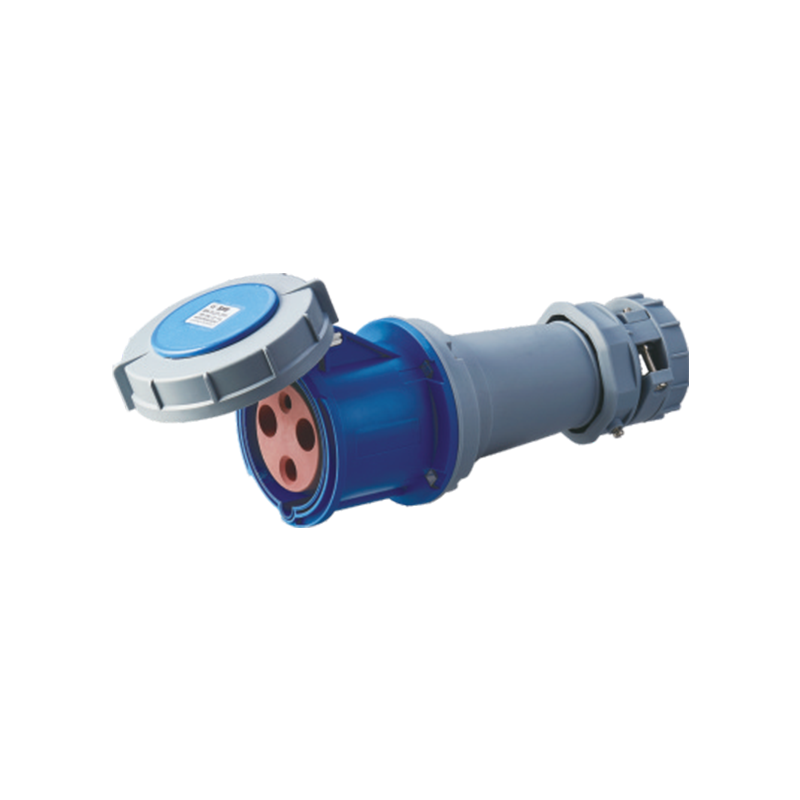
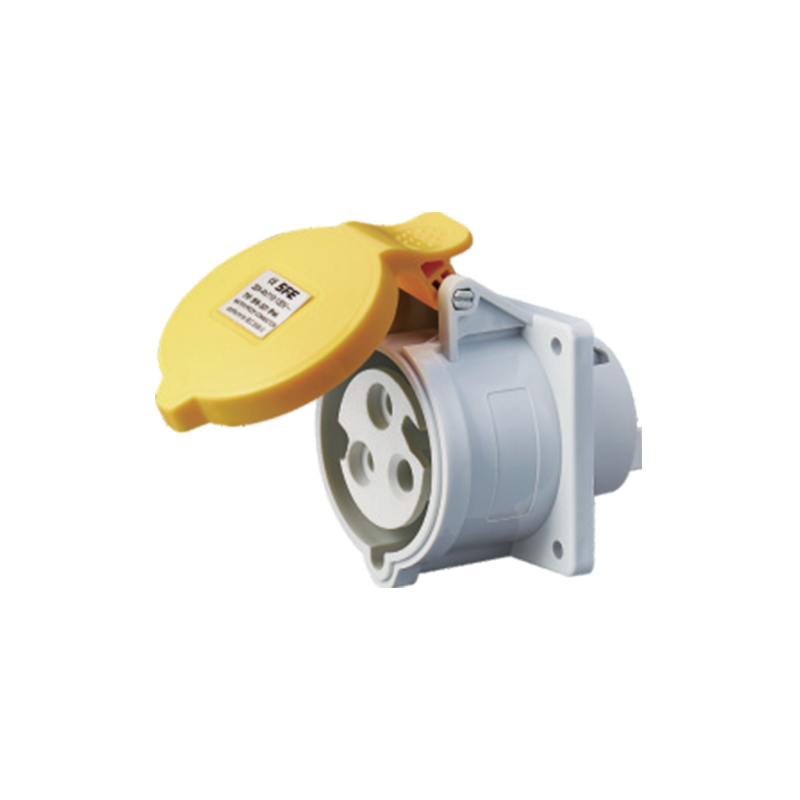
Address: No. 199, Weiwu Road, Yueqing Economic Development Zone, Zhejiang Province, China.
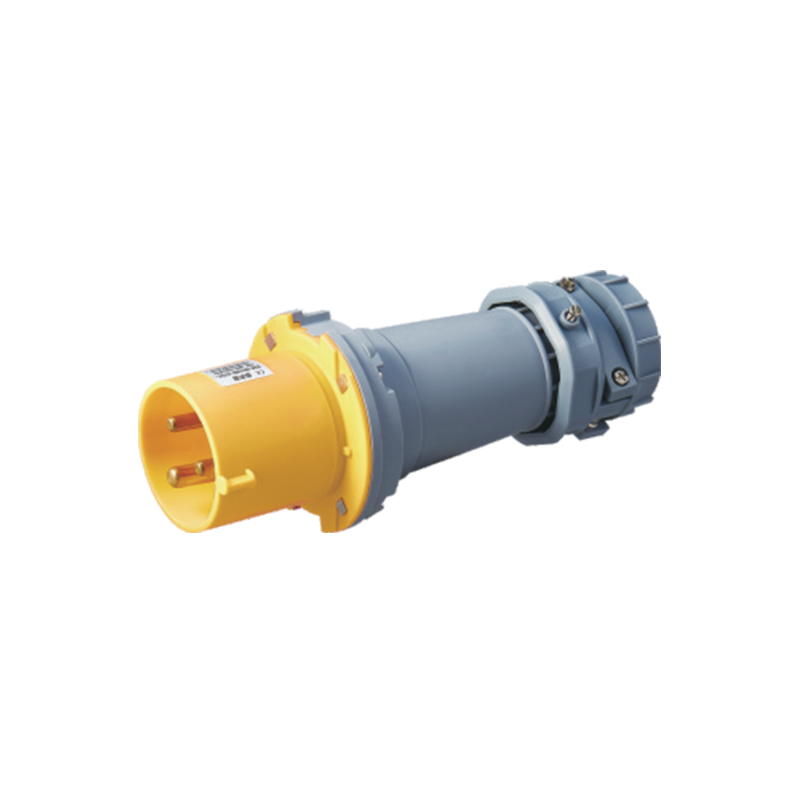
Low voltage does not mean low hazard. A 24V control circuit. A 48V battery bank connection. A 110V site safety supply. These voltages sit below the thresholds that make headlines, but a loose connector at any voltage creates arcing, heat, and equipment failure. A Low-Voltage Rated Safety Industrial Plug is built for circuits where the voltage is modest but the current can be substantial, and where the plug itself is the last line of defense against misconnection. It carries a voltage rating that is deliberate, not just whatever the connector happened to survive in testing.
Why Voltage Rating Is a Safety Feature
A plug rated for low voltage is not just a high-voltage connector running under spec. The pin spacing, the insulation thickness, and the creepage distances are designed for a specific range. A Low-Voltage Rated Safety Industrial Plug prevents someone from plugging a 24V tool into a 230V socket by physical incompatibility. The keying does the work. The earth pin position or the housing profile makes the wrong connection impossible.
Material choice follows the rating. Contacts still need silver or nickel plating to fight oxidation. The housing still needs impact resistance for workshop and site use. But the insulation can be optimized for the lower voltage stress, which often means a more compact body and a lighter connector. That matters when a technician is plugging and unplugging control circuits dozens of times a shift.
Where Low-Voltage Connectors Do Their Job
Battery systems use low-voltage plugs for charging connections and DC output circuits. A 48V battery bank in a telecom shelter or a solar installation needs a connector that handles the continuous current and cannot be confused with the AC mains inlet. A Low-Voltage Rated Safety Industrial Plug with a dedicated keyway makes the connection idiot-proof.
Construction sites run 110V systems for portable tools in many regions. The reduced voltage is the safety measure. The plug that connects those tools has to be just as robust as its higher-voltage counterpart because it gets dragged through mud, run over by wheelbarrows, and yanked out by the cable. The voltage rating on the plug tells the site electrician that this connector belongs on the safety supply and nowhere else.
Control panels and automation cabinets use low-voltage plugs for sensor arrays, actuator power, and communication bus connections. A plug that fits in one orientation and locks positively prevents a loose signal wire from shutting down a production line. A Low-Voltage Rated Safety Industrial Plug with a screw-lock or twist-lock mechanism keeps the connection seated through vibration that would walk a standard connector loose.
The Failure Mode Nobody Notices Until the Line Stops
Intermittent contact is the ghost problem of low-voltage circuits. A 230V arc is visible and loud. A 24V arc is small, silent, and still hot enough to pit contacts and build oxide layers. A Low-Voltage Rated Safety Industrial Plug with strong socket spring pressure and plated contacts fights this from the start. The spring maintains a gas-tight connection. The plating keeps oxidation from filling the microscopic gap.
Water ingress in a low-voltage connector does not cause a short circuit immediately the way it does at higher voltages. It causes corrosion that builds resistance over weeks or months until the circuit stops working for no obvious reason. A Low-Voltage Rated Safety Industrial Plug with an IP65 or IP67 rating and a compression gasket keeps the moisture out before it starts the slow destruction.
Here is what a safety-rated low-voltage plug delivers:
- Deliberate voltage rating with keying that prevents cross-voltage connection
- Plated contacts with spring pressure to maintain a gas-tight joint
- IP rating matched to the environment, with gasket sealing throughout
- Locking mechanism that holds through vibration without backing off
Picking the Right Plug for the Right Low-Voltage Job
A 24V plug looks a lot like a 48V plug looks a lot like a 110V plug. The markings are the difference. A Low-Voltage Rated Safety Industrial Plug with the voltage rating molded into the housing or printed on a durable label removes guesswork during installation and inspection. An electrician tracing a fault at midnight should not have to pull out a meter to confirm what voltage a connector is rated for.
Cable size still matters at low voltage. Current is current. A plug rated for 16A at 24V needs the same terminal capacity as a 16A plug at 230V. A Low-Voltage Rated Safety Industrial Plug with properly sized screw terminals or crimp connections takes the conductor gauge it was designed for without modification.
A low-voltage plug is a small part of a large electrical system. But it sits at the exact point where the fixed wiring ends and the equipment begins. That transition point is where connections get yanked, misplugged, and forgotten. Choose a Low-Voltage Rated Safety Industrial Plug built with deliberate voltage keying, solid contact engineering, and sealing that matches the environment. The circuit will stay connected and stay safe. That is what the voltage rating on the plug is there to guarantee.
