
 English
 Español
 中文简体
中文简体

Address: No. 199, Weiwu Road, Yueqing Economic Development Zone, Zhejiang Province, China.
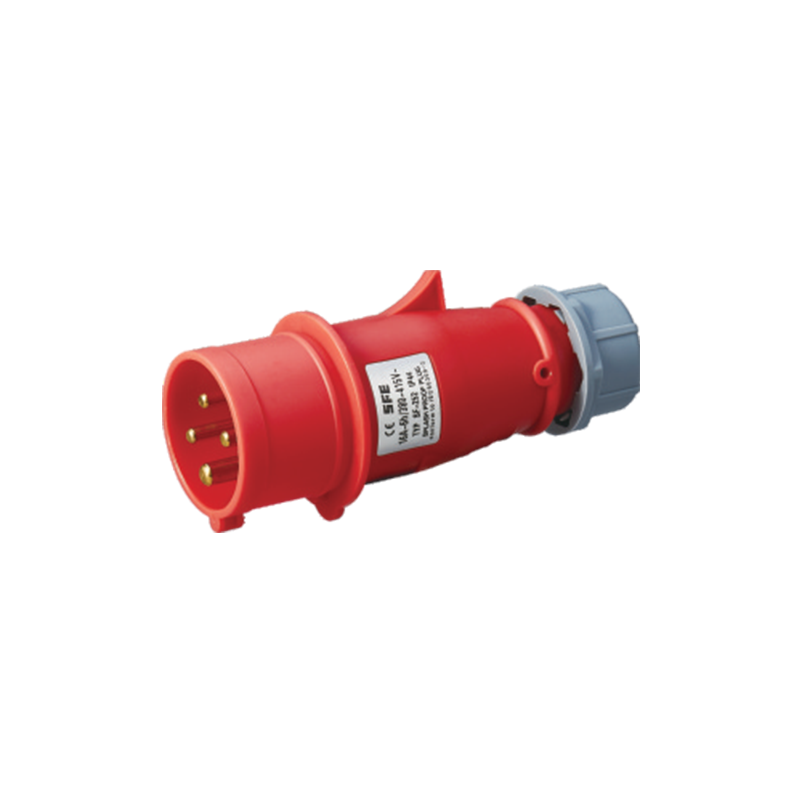
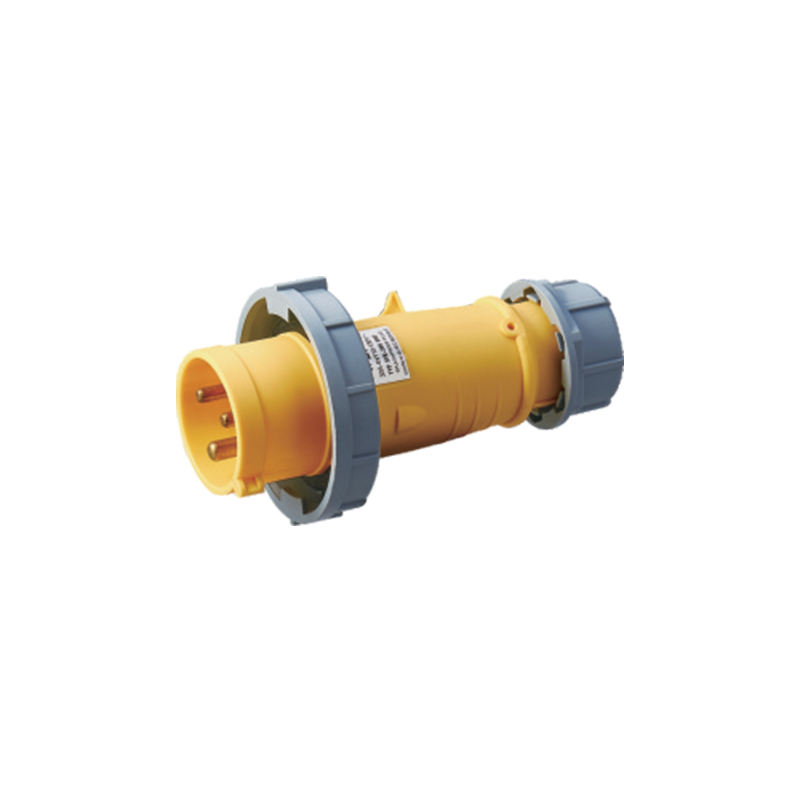
At 200 amps, you are feeding a distribution board, a generator tap box, or a temporary power setup for an entire site section. A 200A high amperage industrial plug is heavy, costly, and must work every time.
Contact Design
Brass contacts work at 63A. At 200A, they do not. A 200A high amperage industrial plug needs solid copper alloy pins and sleeves. Silver plating is standard. Silver oxide conducts. Bare copper oxidizes into a high-resistance layer that turns the connector into a heater.
Sleeve contacts need internal spring reinforcement, typically beryllium copper fingers. Without them, the sleeve wall relaxes after a few hundred cycles. Grip pressure drops. Resistance climbs. Ask the factory for the spring material and the rated cycle life. A plug in generator service gets mated daily. It needs thousands of cycles.
Housing and Weight
- A 200A plug with cable attached is heavy. The housing must carry that load without cracking. Common materials:
- Glass-fibre reinforced polyamide: non-conductive, impact-resistant
- Cast aluminium: handles rough treatment, dissipates heat, needs corrosion protection
- Stainless steel: for marine and offshore use
The cable gland is the most stressed point. Cable cross-sections reach 95mm² to 120mm². The gland must grip the jacket fully. A split gland with two-screw compression works. A single-screw clamp on cable this size does not. If you can twist the cable inside the gland by hand, water enters and conductors loosen.
Pilot Contact Sequence
At 200A, you never make or break the circuit by pushing or pulling a live plug. The arc is dangerous. A pilot contact solves this. The pilot pin is shorter than the main power pins. When mating, it engages last. The control circuit detects it and closes the upstream contactor. When unmating, the pilot breaks first, the contactor drops out, and the main pins separate dead.
Measure the pin lengths. The pilot must be noticeably shorter than the phase pins. A difference of only a couple of millimetres risks the pilot engaging before the power pins fully seat. A 200A high amperage industrial plug factory should stamp pin lengths on the inspection report.
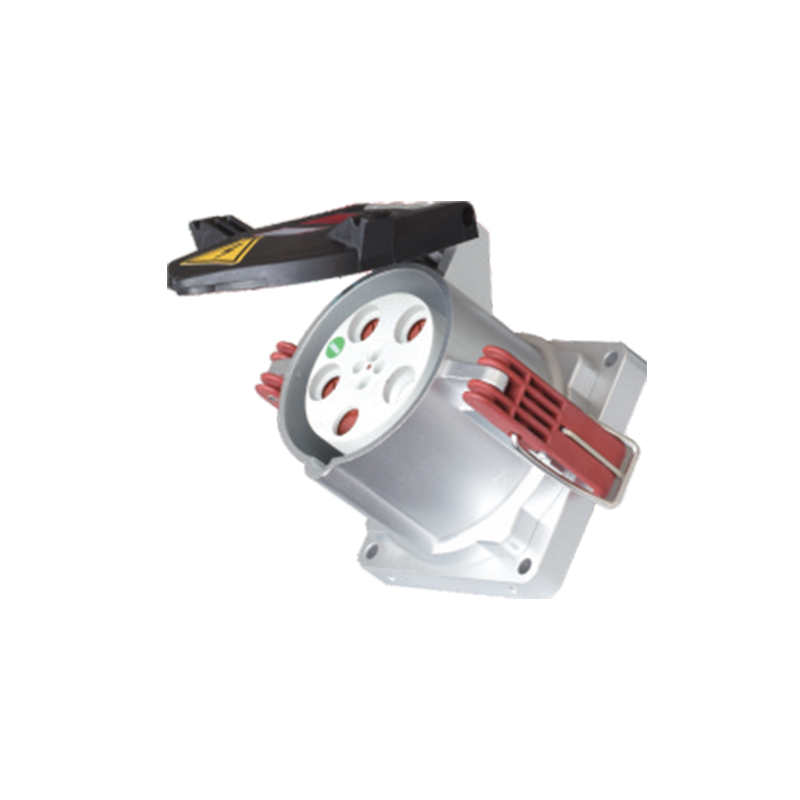
Switch Interlock on the Socket
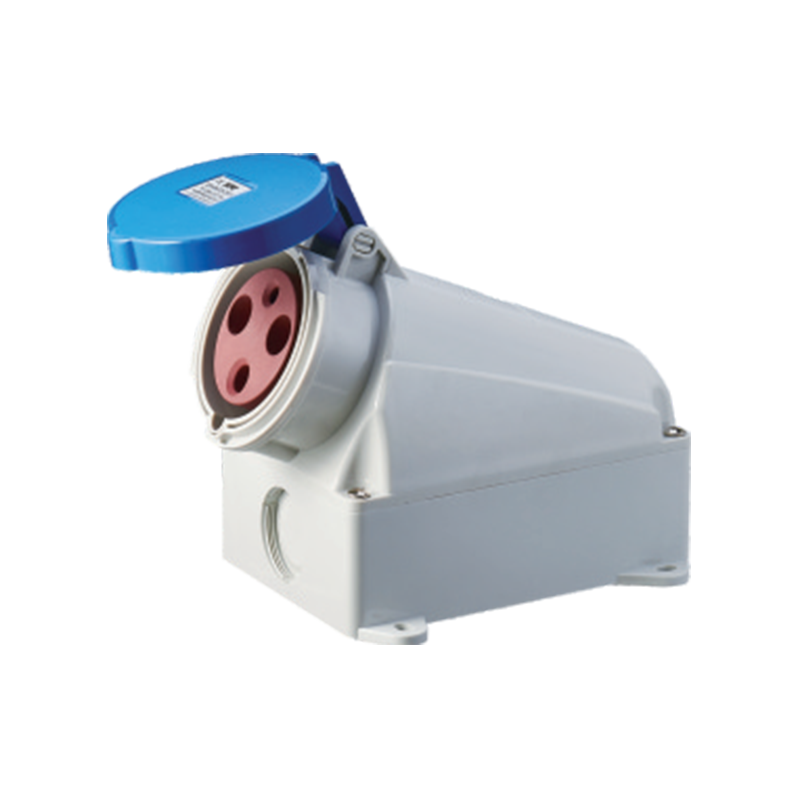
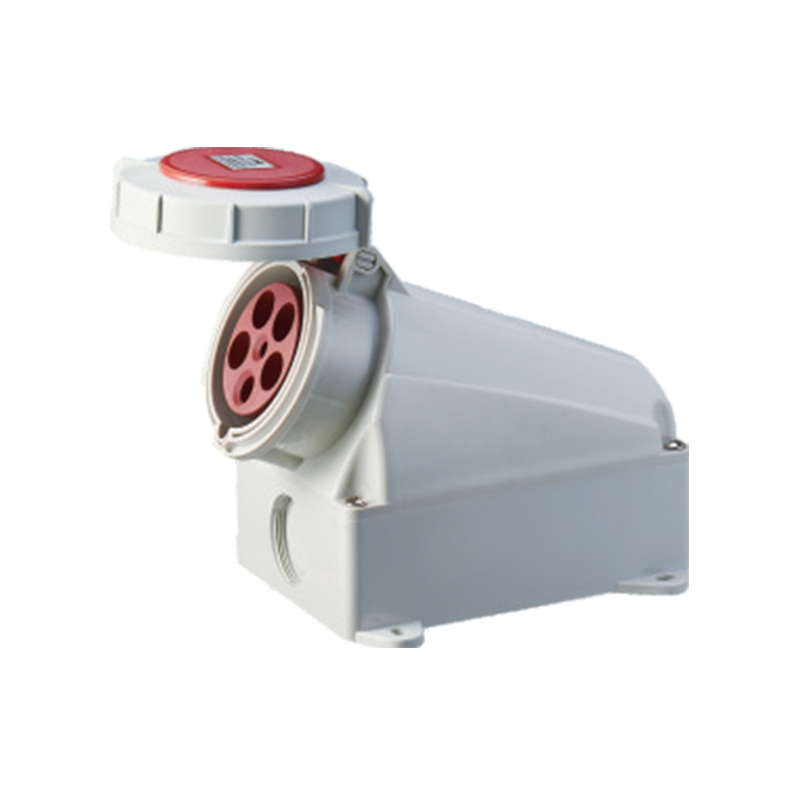
The matching socket often includes a mechanical interlock. The switch must be off before the plug can be inserted or removed. The plug must be fully seated before the switch can turn on. Test this on a sample. Insert the plug halfway and try the switch. If the handle moves at all, the interlock is out of adjustment.
Terminations
Terminals are bolt-down lugs or large cage clamps, not small screws. The contact area must be clean and flat. A serrated surface helps bite stranded copper. The factory must provide torque specifications. Undertorque creates hot joints. Overtorque cracks the terminal body. Open a sample and fit the largest specified cable. The bend should be gentle, not crammed into the housing.
Weatherproofing
Many 200A plugs carry IP66 or IP67. The plug-to-socket seal should be a compression gasket that tightens as the locking ring closes. The cable gland seal must compress evenly around the jacket. A universal gland claiming to fit a wide range of cable sizes often seals poorly at the bad. Check for an O-ring behind the locking ring. If water gets into the thread well, it sits there and eventually enters the contact cavity.
Sample Checks
Here is what to do with a sample:
- Measure pin lengths with a calliper. Pilot shorter than power. Document the numbers.
- Measure contact resistance. Load to rated current for one hour. Check temperature rise.
- Submerge the mated pair for 30 minutes. Open. No water inside.
- Fit the largest cable, tighten, and pull hard at the gland. No movement.
- Cycle the interlock 20 times. No stiffness or grinding.
Markings
The rating, voltage, frequency, IP code, and pin configuration must be marked permanently. Laser-etched or moulded-in. Not a sticker. A sticker peels, and someone guesses the voltage.
A 200A high amperage industrial plug is a piece of switchgear. Check the contacts, the pilot sequence, the gland, and the interlock. The connectors that pass will run for years on a generator tap box in the rain. That is the point.
